
Water Contaminants Explained: What’s Really in Your Pet’s Drinking Water?
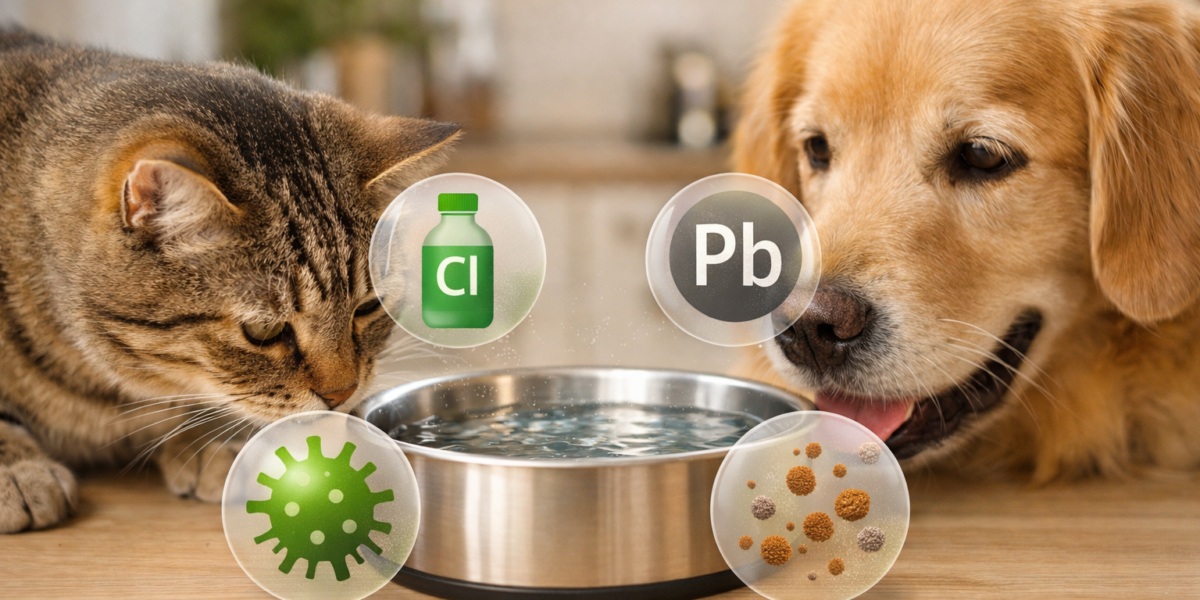
Water Quality Guide — Pet-HydrateIQ
Clean water is essential for your pet’s hydration, kidney function, digestion, and long‑term health. But tap water isn’t always as clean as it looks. Depending on where you live, your water may contain minerals, chemicals, metals, or microorganisms that affect taste, hydration, and overall wellness.
This guide breaks down the most common water contaminants, how they affect pets, and how to ensure your pet’s water is safe.
Why Water Quality Matters for Pets
Pets are more sensitive to certain contaminants than humans because:
- They drink from the same source every day
- They have smaller bodies
- Their kidneys work harder to filter impurities
- They can’t tell you when water tastes “off”
Even mild contamination can affect hydration habits — many pets drink less when water tastes metallic, chlorinated, or mineral-heavy.
Common Water Contaminants Found in Tap Water
Below are the most common contaminants found in municipal and well water, and how each one can affect your pet.
1. Chlorine & Chloramine
What it is:
Chemicals used to disinfect municipal water.
Why it matters:
- Can alter taste and smell
- May reduce drinking behavior
- Can irritate sensitive stomachs
- Chloramine (chlorine + ammonia) is harder to remove
Risk level:
Low for healthy pets, but can affect hydration habits.
How to reduce:
- Activated carbon filters
- Letting water sit uncovered (chlorine only)
- Using a pet fountain with filtration
2. Hard Water (Calcium & Magnesium)
What it is:
Mineral-rich water common in many regions.
Why it matters:
- Can contribute to urinary crystals in cats
- May worsen kidney issues
- Leaves residue in bowls and fountains
- Can affect taste
Risk level:
Moderate for cats and pets with urinary issues.
How to reduce:
- Carbon filters
- Reverse osmosis systems
- Using filtered water for fountains
3. Heavy Metals (Lead, Copper, Iron)
What they are:
Metals that leach from old pipes or plumbing.
Why they matter:
- Lead is toxic even in small amounts
- Copper can cause GI upset
- Iron affects taste and can stain bowls
Risk level:
High for lead; moderate for copper and iron.
How to reduce:
- Replace old plumbing
- Use certified filters (NSF/ANSI 53 or 58)
- Test your water annually
4. Microorganisms (Bacteria, Parasites, Viruses)
What they are:
Biological contaminants like E. coli, Giardia, and Cryptosporidium.
Why they matter:
- Can cause vomiting, diarrhea, and dehydration
- More common in well water or after heavy rainfall
- Pets with weak immune systems are at higher risk
Risk level:
High for untreated water sources.
How to reduce:
- UV sterilization fountains
- Boiling water
- Reverse osmosis systems
- Regular water testing
5. Nitrates & Nitrites
What they are:
Compounds from fertilizers, agricultural runoff, or septic systems.
Why they matter:
- Can reduce oxygen in the blood
- Dangerous for puppies and senior pets
- More common in rural areas
Risk level:
Moderate to high depending on concentration.
How to reduce:
- Reverse osmosis
- Ion exchange systems
- Water testing kits
6. Fluoride
What it is:
A mineral added to municipal water for dental health.
Why it matters:
- Safe in small amounts
- Excessive fluoride may affect thyroid function
- Cats are more sensitive than dogs
Risk level:
Low to moderate, depending on local levels.
How to reduce:
- Reverse osmosis
- Activated alumina filters
7. Pesticides & Industrial Chemicals
What they are:
Chemical runoff from agriculture or industry.
Why they matter:
- Can affect liver and kidney function
- May alter taste and reduce drinking
- More common in rural or industrial areas
Risk level:
Moderate to high depending on exposure.
How to reduce:
- Carbon block filters
- Reverse osmosis
- Regular water testing
How Water Contaminants Affect Pet Hydration
Contaminants can impact hydration in two major ways:
1. Taste & Smell
Pets may drink less if the water tastes:
- Metallic
- Chlorinated
- Earthy
- Bitter
Reduced drinking → dehydration → urinary issues.
2. Biological Stress
Contaminants can strain:
- Kidneys
- Liver
- Digestive system
This is especially important for:
- Senior pets
- Cats (prone to urinary issues)
- Pets with kidney disease
- Puppies and kittens
How to Ensure Your Pet’s Water Is Safe
1. Use a Filtered Water Source
Best options:
- Reverse osmosis
- Carbon block filters
- UV sterilization fountains
2. Test Your Water
Use a pet‑safe water test kit to check:
- Hardness
- pH
- Heavy metals
- Chlorine
- Nitrates
- Bacteria
3. Clean Bowls & Fountains Regularly
- Bowls: every 1–2 days
- Fountains: full clean every 5–7 days
- Replace filters as recommended
4. Use Stainless Steel or Ceramic Bowls
They resist:
- Bacteria
- Biofilm
- Mineral buildup
5. Consider a Pet Water Fountain
Fountains improve:
- Taste
- Freshness
- Oxygenation
- Filtration
FAQ: Water Contaminants & Pet Safety
Is tap water safe for pets?
Usually yes, but contaminants vary by region. Filtered water is safest.
Is hard water bad for pets?
It can contribute to urinary issues, especially in cats.
Should I use filtered water for my pet?
Yes — it improves taste and reduces contaminants.
How often should I test my water?
Annually for municipal water, twice a year for well water.
Final Thoughts
Water quality plays a major role in your pet’s hydration and long‑term health. While most tap water is safe, contaminants like chlorine, heavy metals, and hard minerals can affect taste, hydration habits, and overall wellness. By understanding what’s in your water — and using simple filtration methods — you can ensure your pet drinks safely and consistently.
Leave a Reply