
How to Reduce Water Hardness for Your Pet’s Drinking Water: Simple, Safe Methods
Water Quality Guide — Pet-HydrateIQ
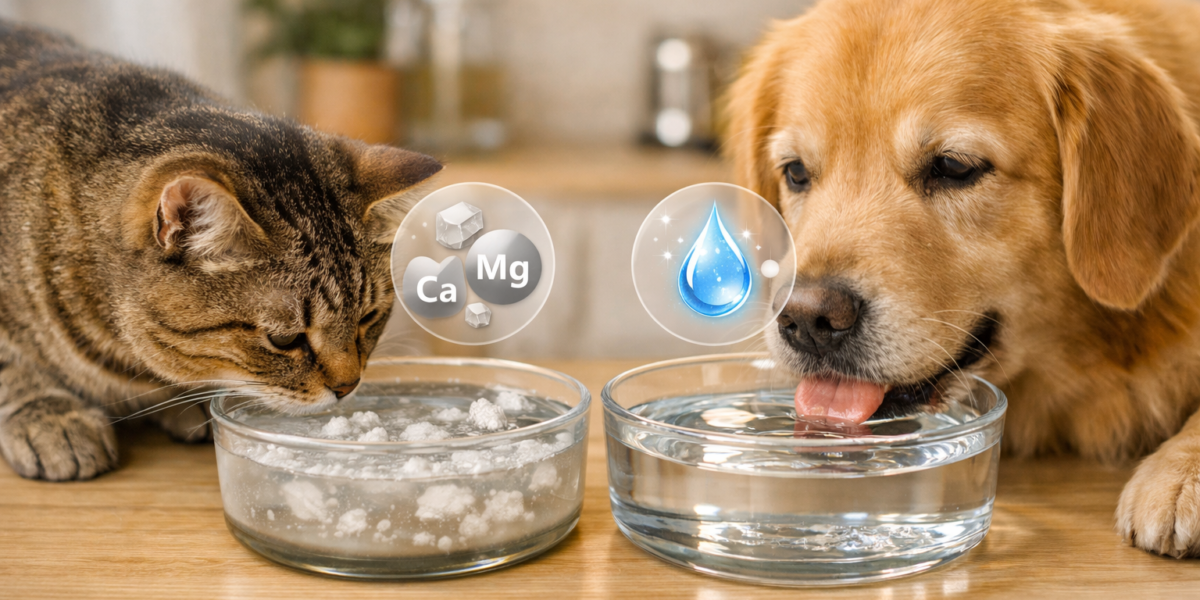
Hard water is extremely common in households across North America, and while it’s usually safe for humans, it can create problems for pets — especially cats and pets with urinary or kidney sensitivities. High mineral content (mainly calcium and magnesium) can affect taste, hydration habits, and even contribute to urinary crystals in sensitive animals.
This guide explains how to reduce water hardness, why it matters for pets, and which methods are safe and effective for improving your pet’s daily drinking water.
Why Reducing Water Hardness Matters for Pets
Hard water can:
- Alter taste → pets drink less
- Increase mineral buildup in fountains and bowls
- Contribute to urinary crystals (especially in cats)
- Stress kidneys in pets with existing kidney disease
- Promote biofilm growth in bowls and fountain pumps
Improving water quality can directly improve hydration — and hydration is foundational to long‑term pet health.
How to Reduce Water Hardness (Step‑by‑Step)
Below is a technical, practical, and pet‑safe process for reducing water hardness at home.
1 Test Your Water Hardness
Start Here
Understanding your baseline hardness level helps you choose the right treatment method.
- Use a water hardness test strip or digital tester.
- Measure hardness in ppm or grains per gallon (gpg).
- Hard water is typically >120 ppm or >7 gpg.
- Record your results to compare after treatment.
2 Use a Carbon Block Filter
Recommended
Carbon filtration reduces chlorine, improves taste, and slightly lowers mineral content.
- Install a pitcher filter (e.g., Brita‑style) or faucet‑mounted filter.
- Replace filters on schedule to maintain effectiveness.
- Use filtered water in your pet’s bowl or fountain.
3 Install a Reverse Osmosis (RO) System
Most Effective
RO systems remove up to 95–99% of dissolved minerals, producing soft, clean water.
- Choose an under‑sink RO system for consistent soft water.
- Ensure the system is NSF/ANSI certified.
- Use RO water for your pet’s drinking water and fountain refills.
- Add a remineralization cartridge if water tastes too flat.
4 Use a Pet Fountain With Multi‑Stage Filtration
Many modern fountains include carbon and ion‑exchange filters that reduce hardness.
- Choose fountains with ion‑exchange resin filters.
- Replace filters every 2–4 weeks.
- Clean the pump and basin weekly to prevent mineral buildup.
- This method improves taste and encourages drinking.
5 Avoid Boiling as a Hardness Solution
Warning
Boiling removes temporary hardness but can increase mineral concentration when water evaporates.
- Boiling does not remove calcium or magnesium.
- Evaporation can make water harder, not softer.
- Use filtration instead of heat‑based methods.
6 Consider Mixing Filtered and Tap Water
If your water is moderately hard, blending can reduce hardness without full RO treatment.
- Mix 50% filtered water + 50% tap water.
- Adjust ratio based on taste and hardness results.
- Always test again after mixing to confirm improvement.
7 Retest Water Hardness Regularly
Maintenance
Water quality can change seasonally or with plumbing updates.
- Test every 1–3 months.
- Monitor for changes in taste, residue, or pet drinking habits.
- Adjust filtration methods as needed.
Which Method Is Best for Pets?
Best Overall:
Reverse Osmosis (RO) — removes the most minerals and contaminants.
Best Budget Option:
Carbon block pitcher filter — improves taste and reduces mild hardness.
Best Convenience Option:
Pet fountain with ion‑exchange filters — improves taste and encourages drinking.
Best for Severe Hardness:
RO + remineralization cartridge — soft water with balanced taste.
How Hard Water Affects Pet Hydration
Hard water can:
- Make water taste metallic or “chalky”
- Reduce drinking behavior
- Increase urinary crystal risk in cats
- Leave mineral residue in bowls and fountains
- Promote pump wear in pet fountains
If your pet drinks less than usual, or if you notice white residue in bowls, hardness may be the cause.
FAQ: Reducing Water Hardness for Pets
Is hard water dangerous for pets?
Not usually, but it can contribute to urinary issues in sensitive pets.
Is softened water safe for pets?
Avoid sodium‑based water softeners — they add salt. Use RO or carbon filtration instead.
Can I use bottled water?
Yes, but check labels — many bottled waters are still hard.
Do fountains help with hardness?
Yes — multi‑stage filters reduce minerals and improve taste.
Final Thoughts
Reducing water hardness is one of the simplest ways to improve your pet’s hydration and long‑term health. Whether you choose a carbon filter, a pet fountain, or a full RO system, the goal is the same: cleaner, better‑tasting water that encourages your pet to drink more.
Leave a Reply