
Filter Types Explained: Best Options for Your Pet’s Drinking Water?
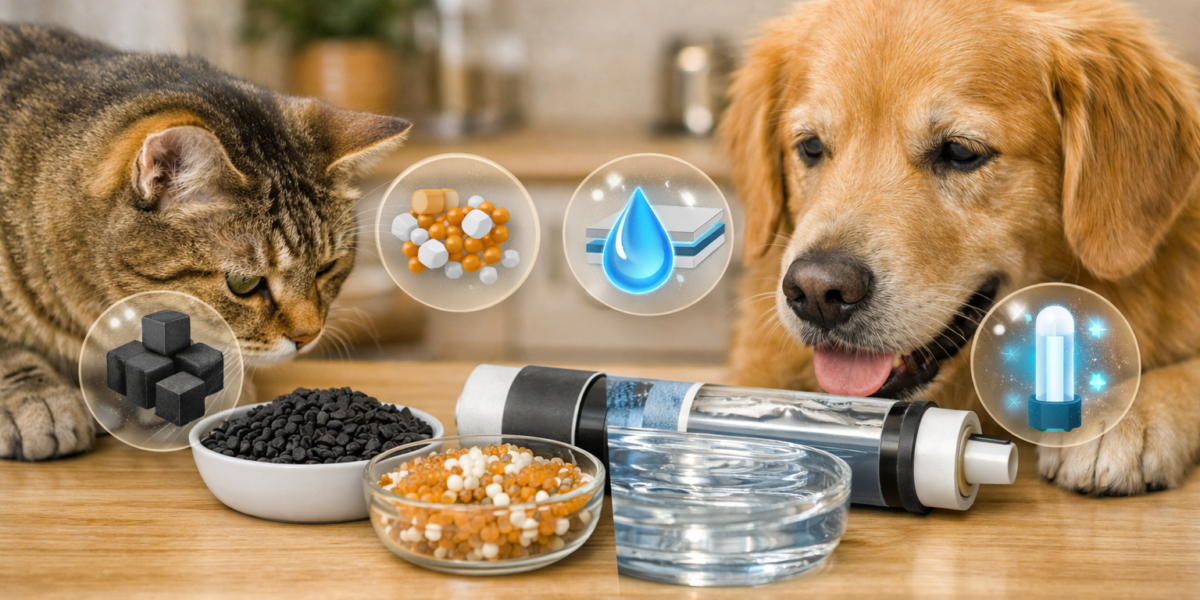
Water Quality Guide — Pet-HydrateIQ
Clean, great‑tasting water is essential for your pet’s hydration, kidney health, and long‑term wellness. But not all water filters are created equal — and some are far more effective at removing contaminants that affect pets, including chlorine, heavy metals, hard minerals, and bacteria.
This guide breaks down the most common water filter types, how they work, what they remove, and which ones are best for improving your pet’s drinking water.
Why Water Filters Matter for Pets
Pets are more sensitive to water quality than humans because:
- They drink from the same source every day
- They have smaller kidneys and lower body mass
- They can’t tell you when water tastes “off”
- They may drink less if the water smells or tastes unusual
Using the right filter can improve:
- Taste
- Smell
- Hydration habits
- Fountain performance
- Long‑term kidney and urinary health
The Most Common Water Filter Types (Explained)
Below are the major filter types used in homes, pitchers, and pet fountains — and what each one does.
1. Activated Carbon Filters
How it works:
Carbon absorbs contaminants through a process called adsorption, trapping chemicals in its porous structure.
Removes:
- Chlorine
- Chloramine (partially)
- Odors
- Bad tastes
- Some organic compounds
Does NOT remove:
- Hard minerals
- Heavy metals (unless combined with other media)
- Microorganisms
Where it’s used:
- Pitcher filters
- Faucet filters
- Most pet fountain filters
Best for:
Improving taste and encouraging pets to drink more.
2. Ion‑Exchange Resin Filters
How it works:
Swaps hardness minerals (calcium, magnesium) with sodium or hydrogen ions.
Removes:
- Hard water minerals
- Some heavy metals (depending on resin type)
Does NOT remove:
- Chlorine
- Bacteria
- Organic chemicals
Where it’s used:
- Pet fountain filters
- Pitcher filters
- Under‑sink systems
Best for:
Reducing water hardness and preventing limescale in fountains.
3. Reverse Osmosis (RO) Systems
How it works:
Forces water through a semi‑permeable membrane that removes nearly all dissolved solids.
Removes:
- Hard minerals
- Heavy metals
- Chlorine & chloramine
- Nitrates
- Fluoride
- Bacteria & viruses
- Pesticides
- Microplastics
Does NOT remove:
- Nothing significant — RO is the most complete filtration method.
Where it’s used:
- Under‑sink RO systems
- Whole‑home RO systems
Best for:
Homes with very hard water, old plumbing, or multiple contaminants.
4. UV Sterilization Filters
How it works:
Uses ultraviolet light to kill microorganisms.
Removes:
- Bacteria
- Viruses
- Parasites (Giardia, Cryptosporidium)
Does NOT remove:
- Minerals
- Chemicals
- Heavy metals
Where it’s used:
- Smart pet fountains
- Whole‑home UV systems
- Well water treatment
Best for:
Homes with well water or bacterial contamination concerns.
5. Sediment Filters
How it works:
Physically traps particles like sand, rust, and debris.
Removes:
- Sediment
- Rust flakes
- Dirt
- Particulates
Does NOT remove:
- Chemicals
- Minerals
- Microorganisms
Where it’s used:
- Pre‑filters in RO systems
- Whole‑home filtration
- Some fountains with mesh screens
Best for:
Protecting pumps and extending filter lifespan.
6. Ceramic Filters
How it works:
Water passes through a porous ceramic shell that blocks microorganisms.
Removes:
- Bacteria
- Sediment
- Some parasites
Does NOT remove:
- Chemicals
- Hard minerals
- Heavy metals
Where it’s used:
- Gravity filters
- Countertop systems
Best for:
Homes concerned about biological contaminants.
7. Activated Alumina Filters
How it works:
Adsorbs fluoride and arsenic through a specialized porous medium.
Removes:
- Fluoride
- Arsenic
- Selenium
Does NOT remove:
- Hardness
- Chlorine
- Bacteria
Where it’s used:
- Under‑sink systems
- Specialty filters
Best for:
Regions with high fluoride or arsenic levels.
Which Filter Type Is Best for Pets?
Best Overall Water Quality:
Reverse Osmosis (RO) removes nearly all contaminants and improves taste.
Best for Hard Water:
Ion‑exchange resin + carbon. Common in pet fountain filters.
Best for Taste & Smell:
Activated carbon encourages pets to drink more.
Best for Bacteria:
UV sterilization Ideal for well water or fountains prone to biofilm.
Best Budget Option:
Pitcher filter (carbon + resin) Improves taste and reduces mild hardness.
How to Choose the Right Filter for Your Pet
Ask yourself:
1. Do you have hard water?
Look for:
- Ion‑exchange resin
- RO systems
2. Does your water taste or smell like chlorine?
Look for:
- Activated carbon
3. Do you use well water?
Look for:
- UV sterilization
- Sediment filters
- RO
4. Does your pet fountain get limescale?
Look for:
- Resin filters
- RO water
5. Does your pet drink less than expected?
Look for:
- Carbon filters (taste improvement)
- Stainless steel fountains
FAQ: Water Filters for Pets
Do pets need filtered water?
Filtered water improves taste and reduces contaminants — most pets benefit from it.
Is RO water safe for pets?
Yes — it’s one of the cleanest water sources available.
Do fountain filters remove hard water?
Partially — only if they include ion‑exchange resin.
How often should I replace filters?
Every 2–4 weeks for fountains, depending on hardness and usage.
Is bottled water better than filtered tap water?
Not always — many bottled waters are still hard.
Final Thoughts
Understanding water filter types helps you choose the safest, cleanest, and most effective water source for your pet. Whether you use a simple carbon filter or a full RO system, the goal is the same: better‑tasting water that encourages healthy hydration and supports long‑term wellness.
Leave a Reply