
How to Improve Water Quality at Home for Your Pet
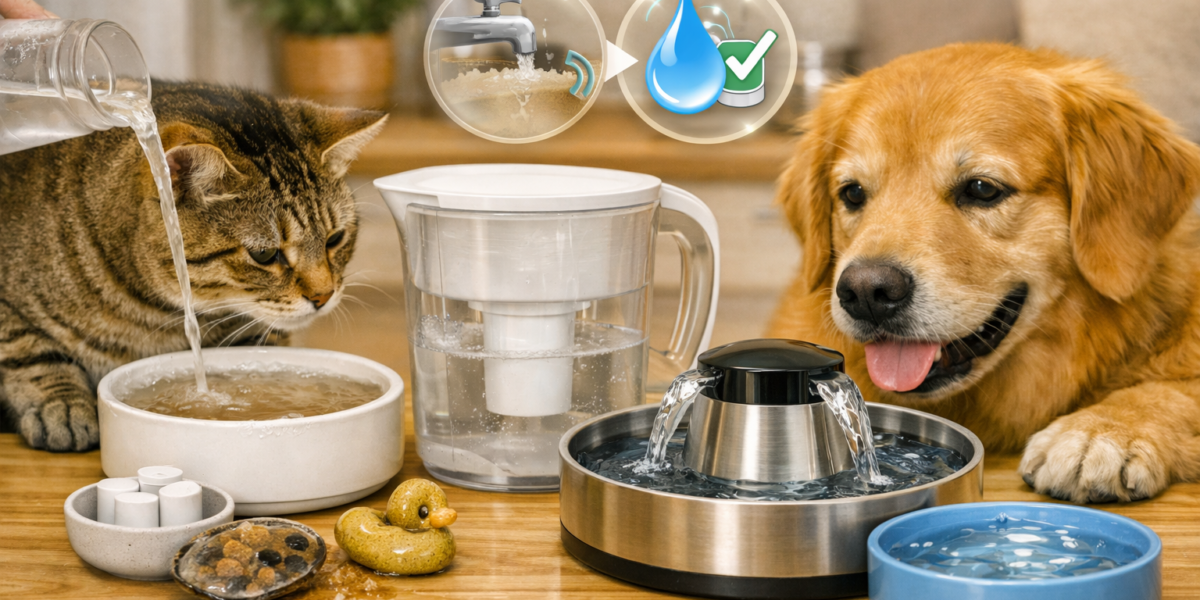
Water Quality Guide — Pet-HydrateIQ
Water quality plays a major role in your pet’s hydration, kidney function, and long‑term health. Even if your tap water is considered “safe,” it may still contain contaminants that affect taste, hydration habits, and urinary health — especially in sensitive pets.
Improving water quality at home doesn’t have to be complicated. This guide breaks down the most effective ways to enhance your pet’s drinking water, reduce contaminants, and support healthier hydration.
Why Improving Water Quality Matters for Pets
Pets are more sensitive to water quality than humans because:
- They drink from the same source every day
- They have smaller kidneys and lower body mass
- They may drink less if water tastes or smells unusual
- They can’t tell you when water quality changes
Better water quality leads to:
- Improved hydration
- Better kidney and urinary health
- Reduced risk of urinary crystals (especially in cats)
- Cleaner fountains and bowls
- Longer pump and filter lifespan
How to Improve Water Quality at Home (Most Effective Methods)
Below are the top ways to improve water quality, ranked by effectiveness and practicality.
1. Use a Water Filter (Most Effective)
Filtering your tap water is the single best way to improve quality for both pets and humans.
Best filter types for pets:
Activated Carbon Filters
- Removes chlorine, odors, and bad tastes
- Encourages pets to drink more
Ion‑Exchange Resin Filters
- Reduces hardness minerals (calcium & magnesium)
- Prevents limescale in fountains
Reverse Osmosis (RO) Systems
- Removes nearly all contaminants
- Best for homes with hard water, old pipes, or well water
UV Sterilization
- Kills bacteria, viruses, and parasites
- Ideal for well water or biofilm‑prone fountains
Recommendation: Use carbon + resin for taste and hardness, or RO for maximum purity.
2. Use a Pet Water Fountain
Pet fountains improve water quality by:
- Circulating water
- Reducing bacterial growth
- Filtering out debris
- Improving taste and smell
- Encouraging pets to drink more
Choose fountains with:
- Multi‑stage filters
- Stainless steel or ceramic bowls
- Quiet, energy‑efficient pumps
3. Clean Bowls and Fountains Regularly
Even clean water becomes contaminated if the bowl or fountain isn’t maintained.
Cleaning schedule:
- Bowls: Every 1–2 days
- Fountains: Every 5–7 days
- Pump disassembly: Every 2–4 weeks
- Filter replacement: Every 2–4 weeks
Hard water areas may require more frequent cleaning.
4. Reduce Water Hardness
Hard water affects taste, hydration, and fountain performance.
Ways to reduce hardness:
- Use a carbon + resin pitcher filter
- Use RO water
- Use a fountain with ion‑exchange filters
- Descale fountains regularly with vinegar
Avoid sodium‑based water softeners — they add salt.
5. Test Your Water Regularly
Testing helps you understand what contaminants you’re dealing with.
Test for:
- Hardness
- Chlorine
- Heavy metals
- pH
- Bacteria
- Nitrates/nitrites
Best test kits:
- Safe Home Premium
- Tap Score
- Test Assured
- JNW Hardness Strips
Test annually for municipal water and twice per year for well water.
6. Use Stainless Steel or Ceramic Bowls
These materials:
- Resist bacteria
- Prevent biofilm buildup
- Don’t absorb odors
- Are easier to clean
- Don’t react with minerals
Plastic bowls scratch easily and harbor bacteria — avoid them when possible.
7. Keep Water Fresh and Cool
Pets prefer:
- Fresh water
- Cool water
- Water without odors
Replace water daily, especially in warm weather.
8. Avoid Contaminated Sources
Do not use:
- Outdoor hoses (contain lead)
- Toilet water
- Stagnant outdoor bowls
- Water from old galvanized pipes
These can contain bacteria, heavy metals, or chemical residues.
Which Pets Benefit Most From Improved Water Quality?
High‑risk pets:
- Cats with urinary crystals
- Senior pets
- Pets with kidney disease
- Pets with diabetes
- Pets with chronic UTIs
- Pets on dry food only
Low‑risk pets:
- Healthy adult dogs
- Pets on mixed or wet diets
FAQ: Improving Water Quality for Pets
Is filtered water better for pets?
Yes — it improves taste and reduces contaminants.
Is RO water safe for pets?
Yes — it’s one of the cleanest water sources available.
Do fountains improve water quality?
Yes — they circulate and filter water, reducing bacteria.
How often should I replace filters?
Every 2–4 weeks, depending on hardness and usage.
Is bottled water better than tap water?
Not always — many bottled waters are still hard.
Final Thoughts
Improving water quality at home is one of the simplest ways to support your pet’s hydration and long‑term health. Whether you use a filter, a fountain, or a full RO system, the goal is the same: cleaner, better‑tasting water that encourages your pet to drink more.
Leave a Reply