
How Much Water Should a Cat Drink Per Day?
Hydration Science Guide — Pet-HydrateIQ
Cats are notoriously picky drinkers, and many pet owners worry their cat isn’t drinking enough water. Hydration plays a major role in kidney health, digestion, temperature regulation, and overall well-being — especially for cats, who naturally have a low thirst drive. So how much water does a cat actually need each day?
This guide breaks down the science behind feline hydration, how to calculate your cat’s daily water needs, and how to encourage healthier drinking habits.
How Much Water Does a Cat Need Daily?
Most healthy adult cats need 3.5–4.5 ounces (100–130 ml) of water per 5 pounds (2.2 kg) of body weight per day.
Daily Water Intake by Weight
| Cat Weight | Daily Water Needed |
|---|---|
| 5 lbs (2.2 kg) | 3.5–4.5 oz (100–130 ml) |
| 10 lbs (4.5 kg) | 7–9 oz (200–260 ml) |
| 15 lbs (6.8 kg) | 10–13 oz (300–390 ml) |
This includes all sources of water:
- Drinking water
- Water in wet food
- Water in broths or toppers
Wet Food vs. Dry Food: Why It Matters
Diet dramatically affects hydration.
Cats on Dry Food
- Kibble contains 5–10% moisture
- Cats must drink significantly more water to compensate
- Many cats don’t drink enough to balance this
Cats on Wet Food
- Canned food contains 70–80% moisture
- A 3‑oz can provides ~2.4 oz of water
- Cats on wet food often meet most of their hydration needs through diet
Mixed Feeding
A combination of wet + dry food is often ideal for hydration and dental health.
Why Cats Don’t Naturally Drink Enough
Cats evolved as desert animals. Their bodies are designed to:
- Conserve water
- Produce concentrated urine
- Get moisture from prey (which is ~70% water)
This means:
- Many cats don’t feel thirsty until they’re already dehydrated
- Still water bowls don’t appeal to them
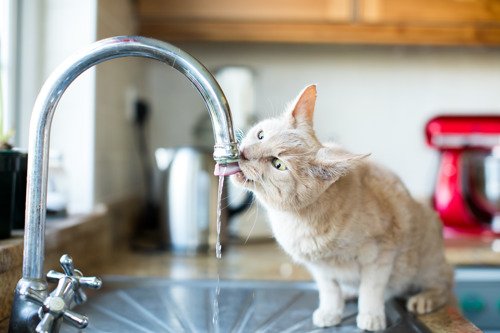
- Running water (fountains) triggers natural drinking instincts
Signs Your Cat May Not Be Drinking Enough
Watch for these dehydration symptoms:
- Sticky or tacky gums
- Lethargy
- Sunken eyes
- Reduced skin elasticity
- Constipation
- Strong‑smelling urine
- Reduced appetite
If you notice multiple signs, contact your veterinarian.
How to Encourage Your Cat to Drink More Water
1. Use a Pet Water Fountain
Cats prefer running water because:
- It tastes fresher
- It smells cleaner
- It mimics natural streams
- It stimulates instinctive drinking behavior
Smart fountains also help maintain:
- Better filtration
- Lower bacteria levels
- Consistent flow
2. Add Wet Food to Their Diet
Even one wet meal per day can significantly improve hydration.
3. Offer Multiple Water Stations
Place bowls or fountains:
- Away from food
- In quiet areas
- On each floor of your home
4. Keep Water Fresh
Cats reject stale or warm water. Refresh daily.
5. Try Broths or Hydration Toppers
Choose pet‑safe, low‑sodium options.
How to Calculate Your Cat’s Water Intake
Use this simple formula:
Example: A 4.5 kg (10 lb) cat needs 225–270 ml per day.
When to See a Veterinarian
Contact your vet if your cat:
- Suddenly drinks much more or much less
- Shows signs of dehydration
- Has kidney disease, diabetes, or thyroid issues
- Has vomiting or diarrhea
Hydration changes can signal underlying health problems.
FAQ: Cat Hydration
How can I tell if my cat is drinking enough?
Monitor water bowl levels, check gum moisture, and watch for changes in urine output.
Do senior cats need more water?
Yes — older cats are more prone to dehydration and kidney issues.
Is tap water safe for cats?
Generally yes, but hard water or contaminants can affect taste and hydration. Filtered water is ideal.
Do cats prefer cold or room‑temperature water?
Most prefer cool, fresh water — fountains help maintain this.
Final Thoughts
Most cats need 3.5–4.5 ounces of water per 5 pounds of body weight each day, but many don’t naturally drink enough. Diet, environment, and water quality all play major roles in hydration.
By offering fresh water, using a fountain, and incorporating wet food, you can significantly improve your cat’s hydration and long‑term health.
Leave a Reply